From Roman Baths to Modern Bathrooms
A bird, a fish and the things you notice when you look down.
Read the story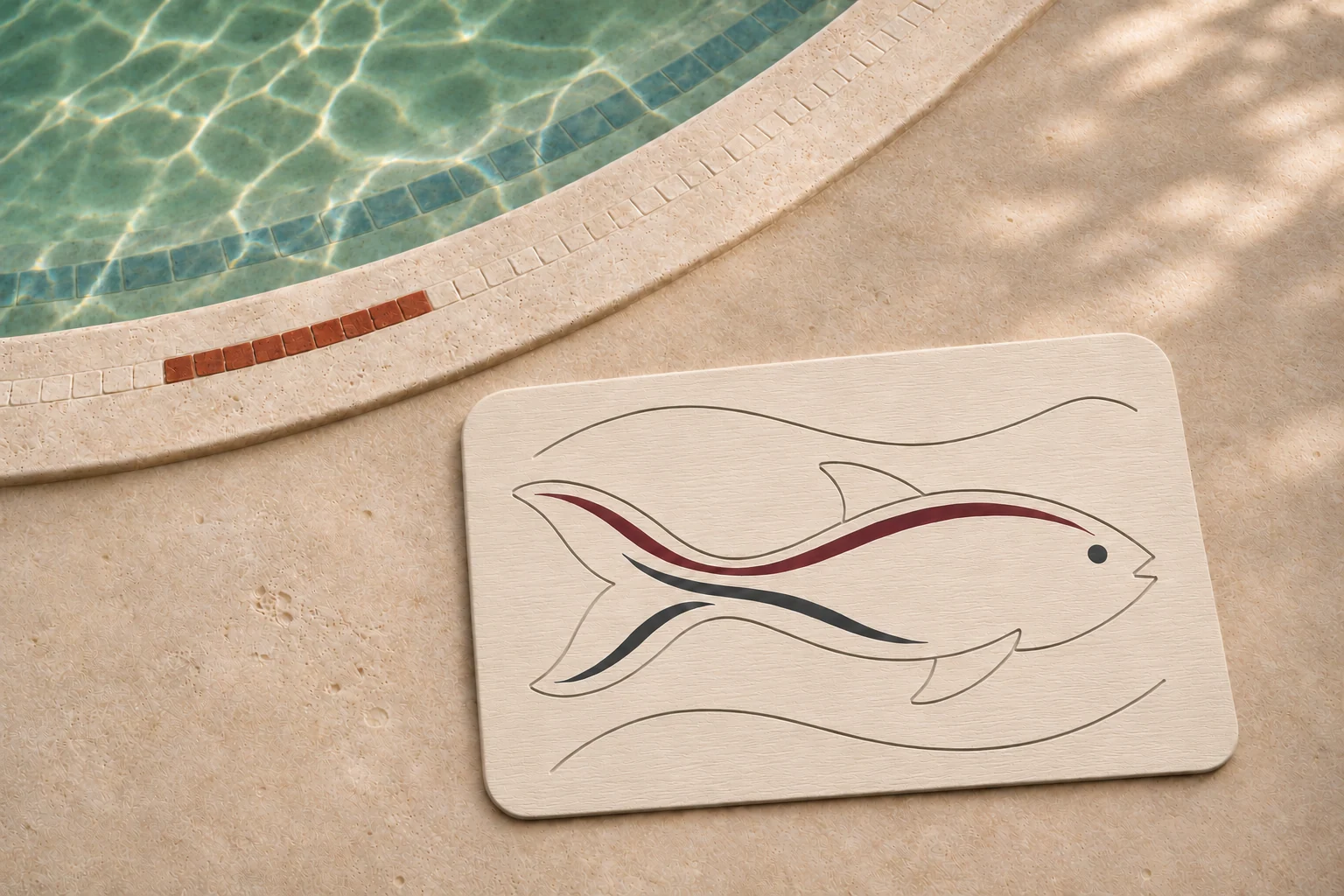
The bird at the threshold
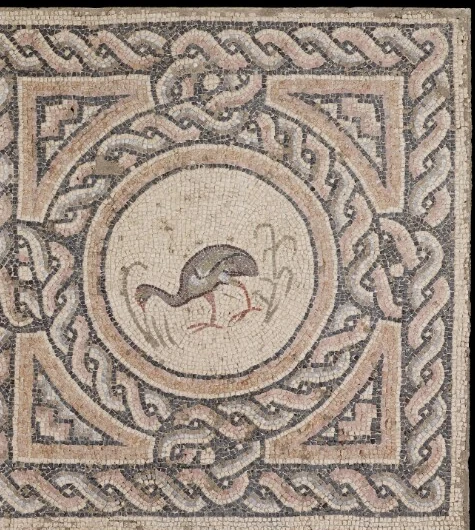
Imagine you’re on your way to the cold room of a Roman bath near Antioch. Just before you reach it, you glance down. A little brown bird has its head bent over a sprig. Its long bill is a stone’s breadth from the leaves. You can almost see the next peck.
A mosaic maker set that woodcock into the floor about sixteen hundred years ago. What caught our eye was the angle of its neck. Someone had watched a bird feed closely enough for us to recognise the gesture all this time later.
A current made of stone
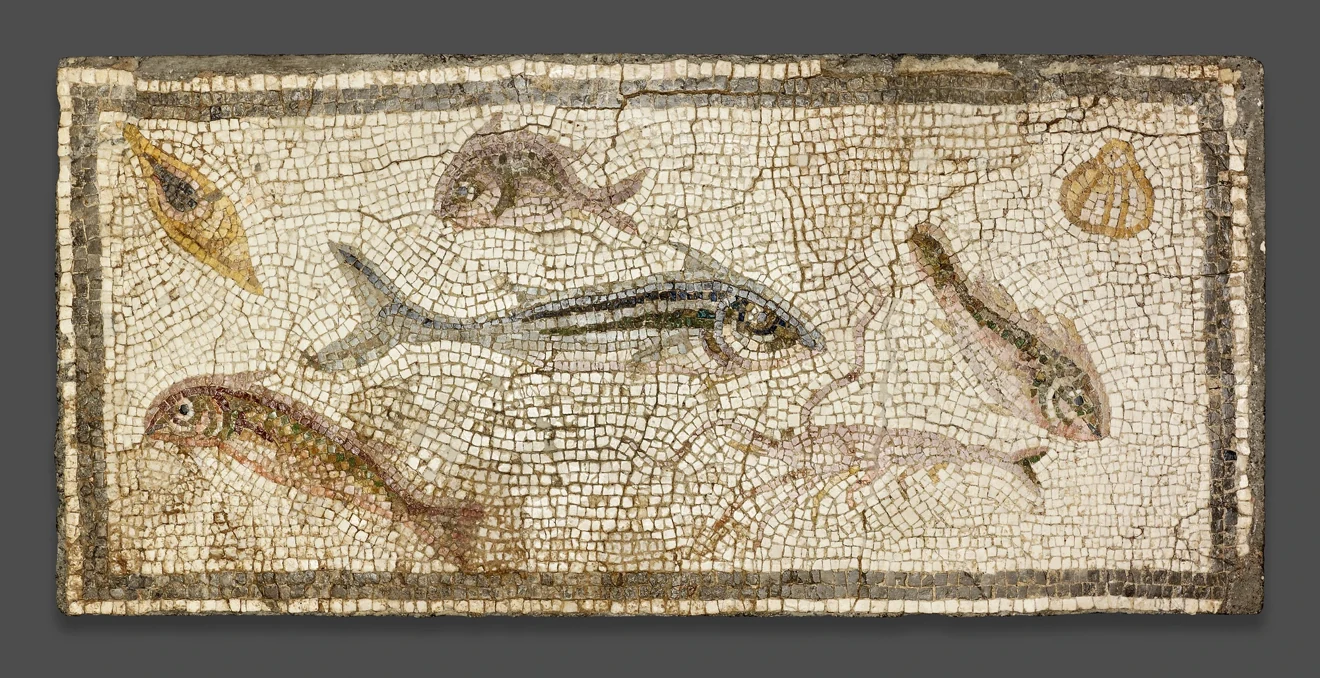
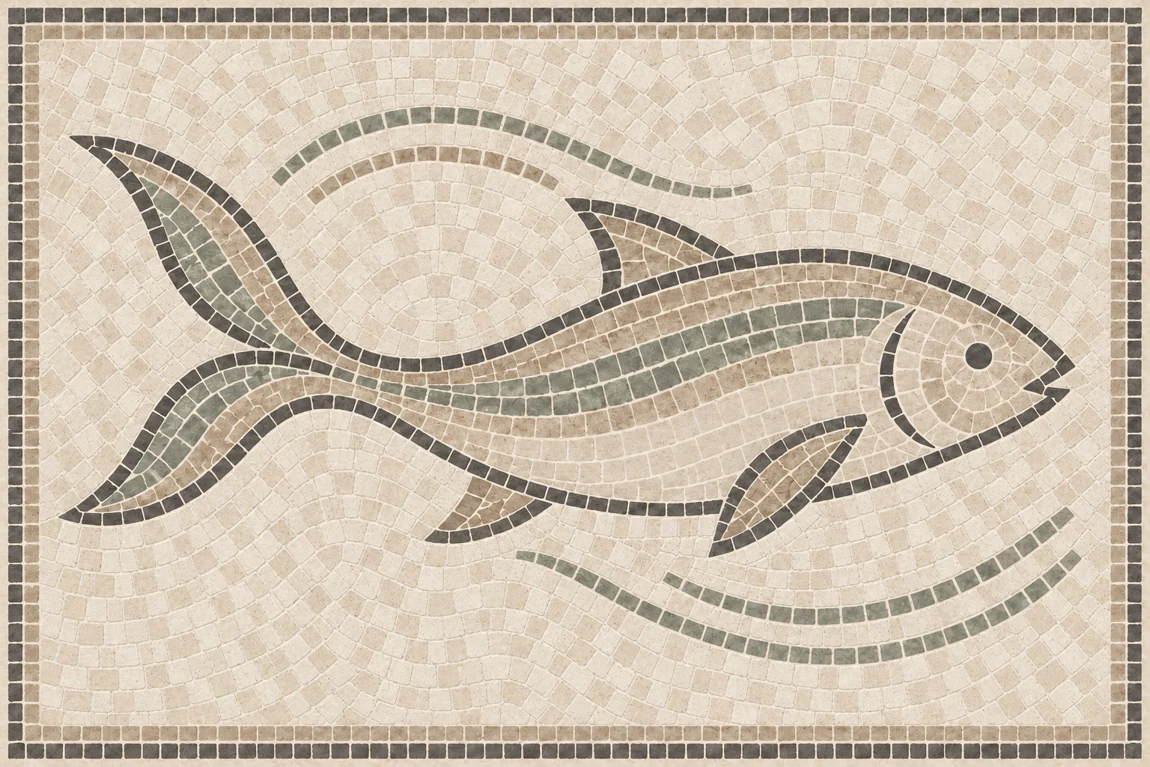
In an earlier floor from a house at nearby Daphne, a striped fish swims through rows of pale stone. Look just beneath its belly. The rows bend around the fish, and suddenly the white ground looks like water.
We kept coming back to that little change of direction. How much of the water could we take away and still leave a fish swimming?
A bird and a fish, tile by tile
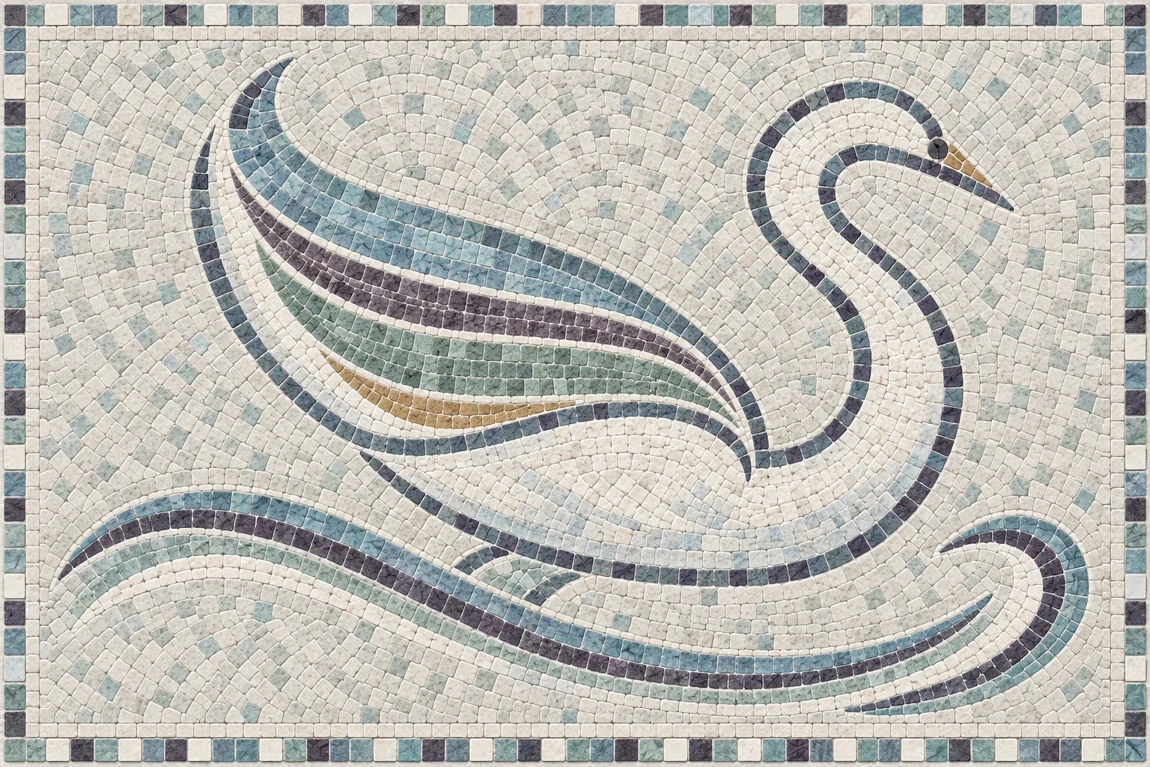
In our studio studies, a checked border frames the waterbird. Bands of sea blue, green and ochre follow the fold of its wing. Around the fish, two rows of little stones describe a current. When we pictured these patterns on a bathroom floor, we wanted to give both animals a little more open water.
What the pencil kept
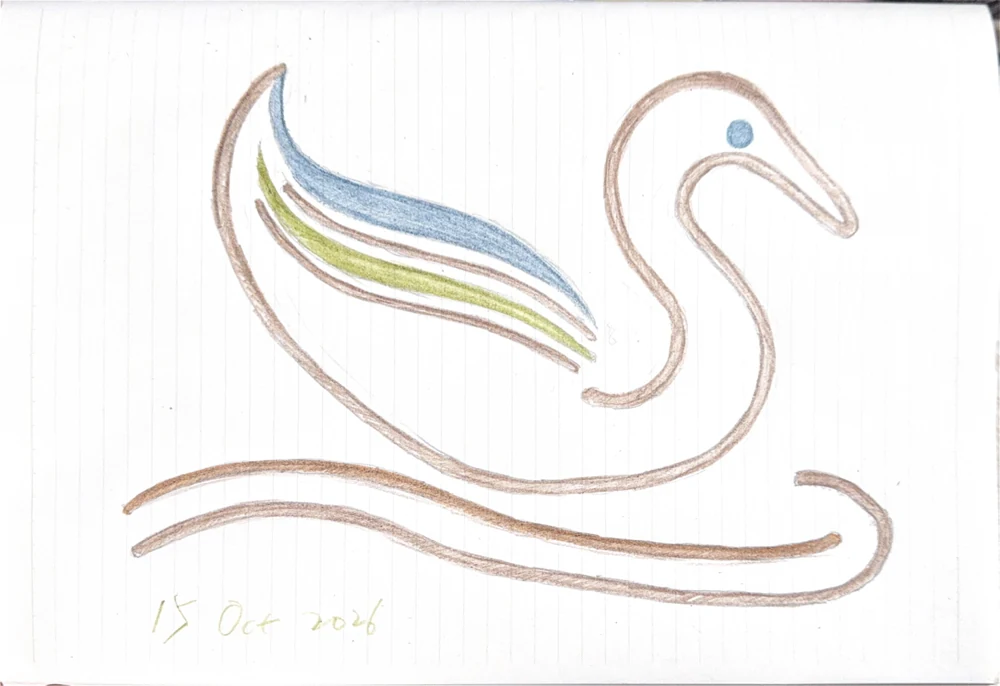
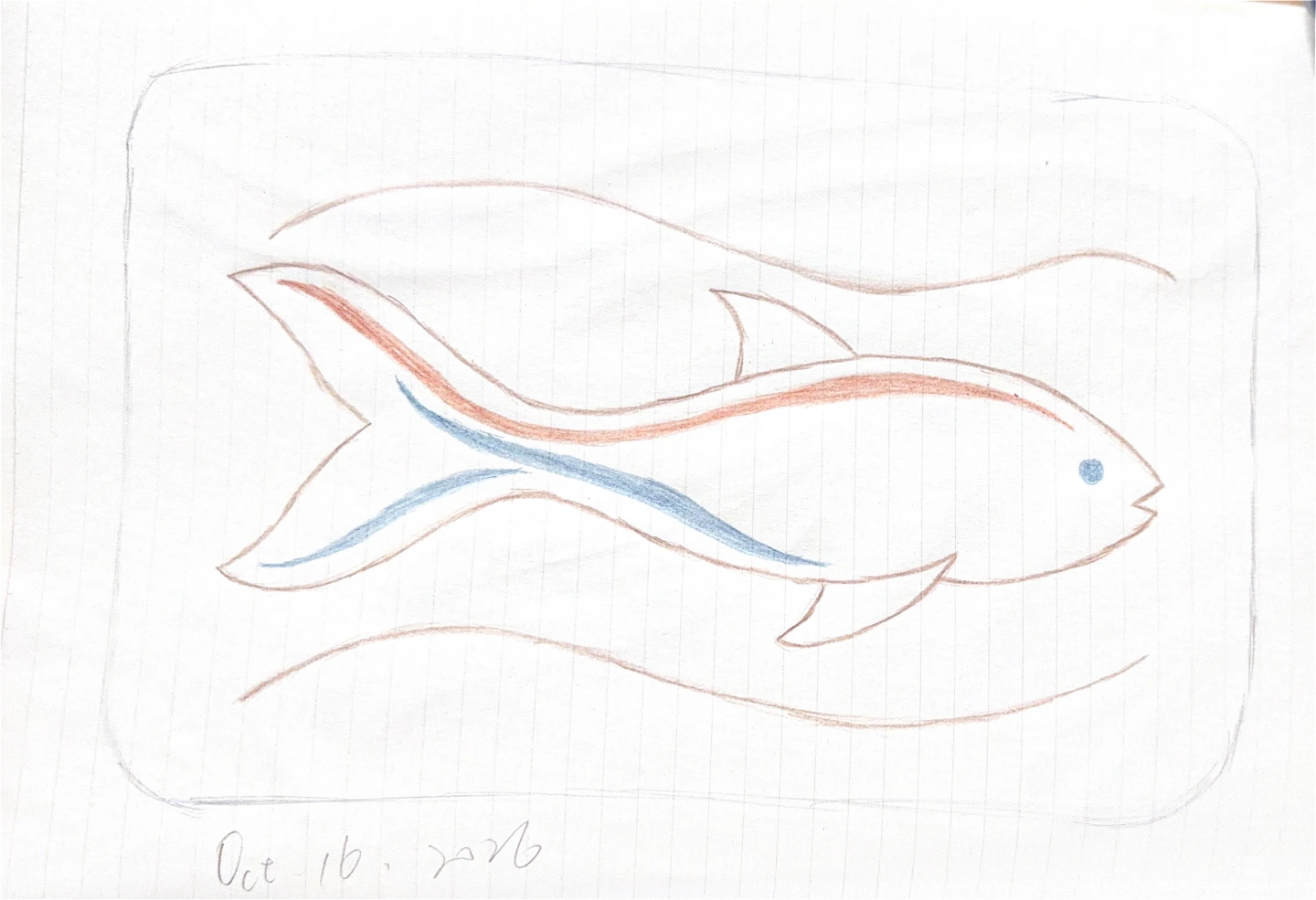
We set the borders aside and followed each animal with a pencil. Trace the waterbird’s neck from its bill to its breast and your hand makes one slow turn. Follow the fish from its forked tail towards its eye and you’re across the page in a stroke. Even with the tiles gone, the two still move at different speeds.
Two sides of the shore
Back at the bath
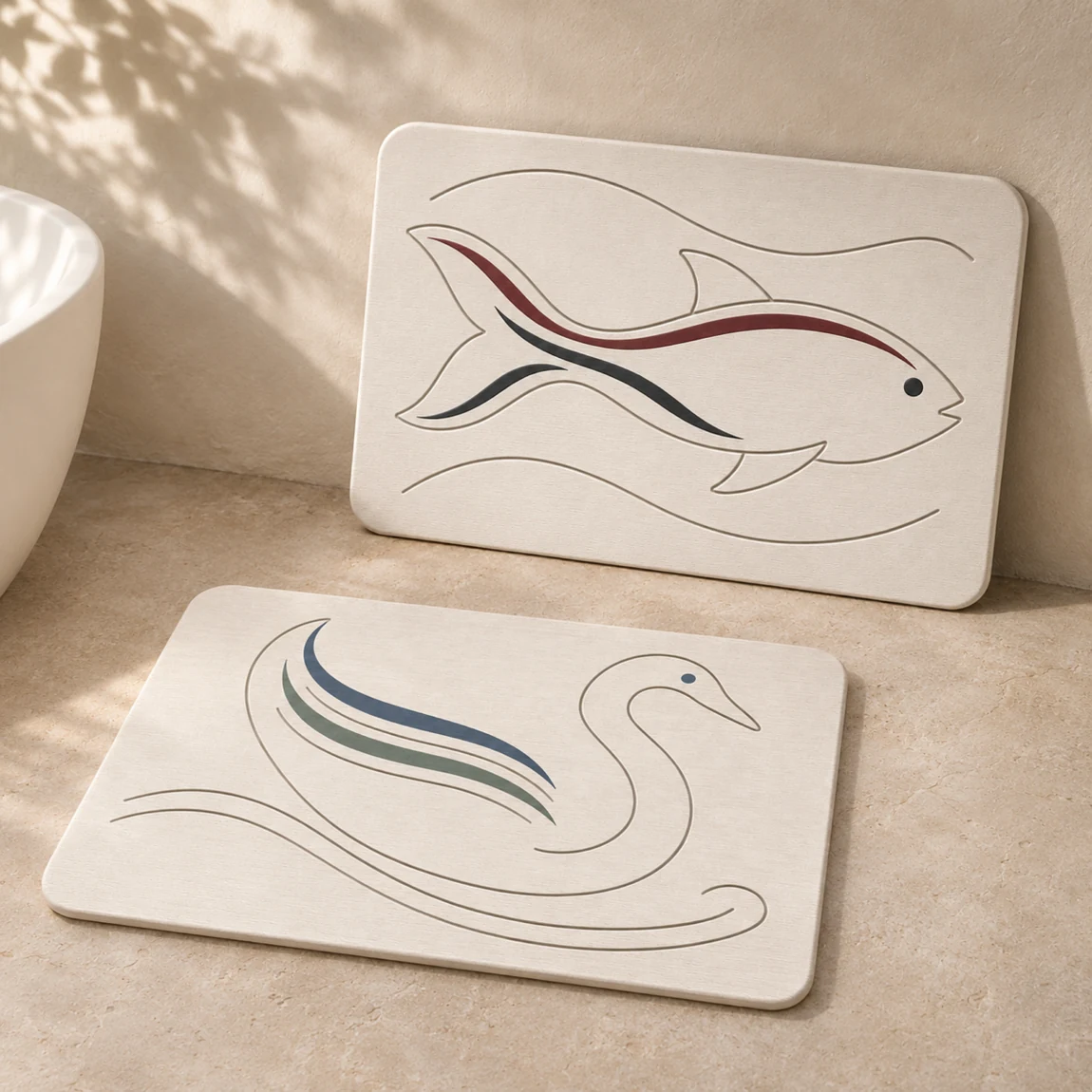
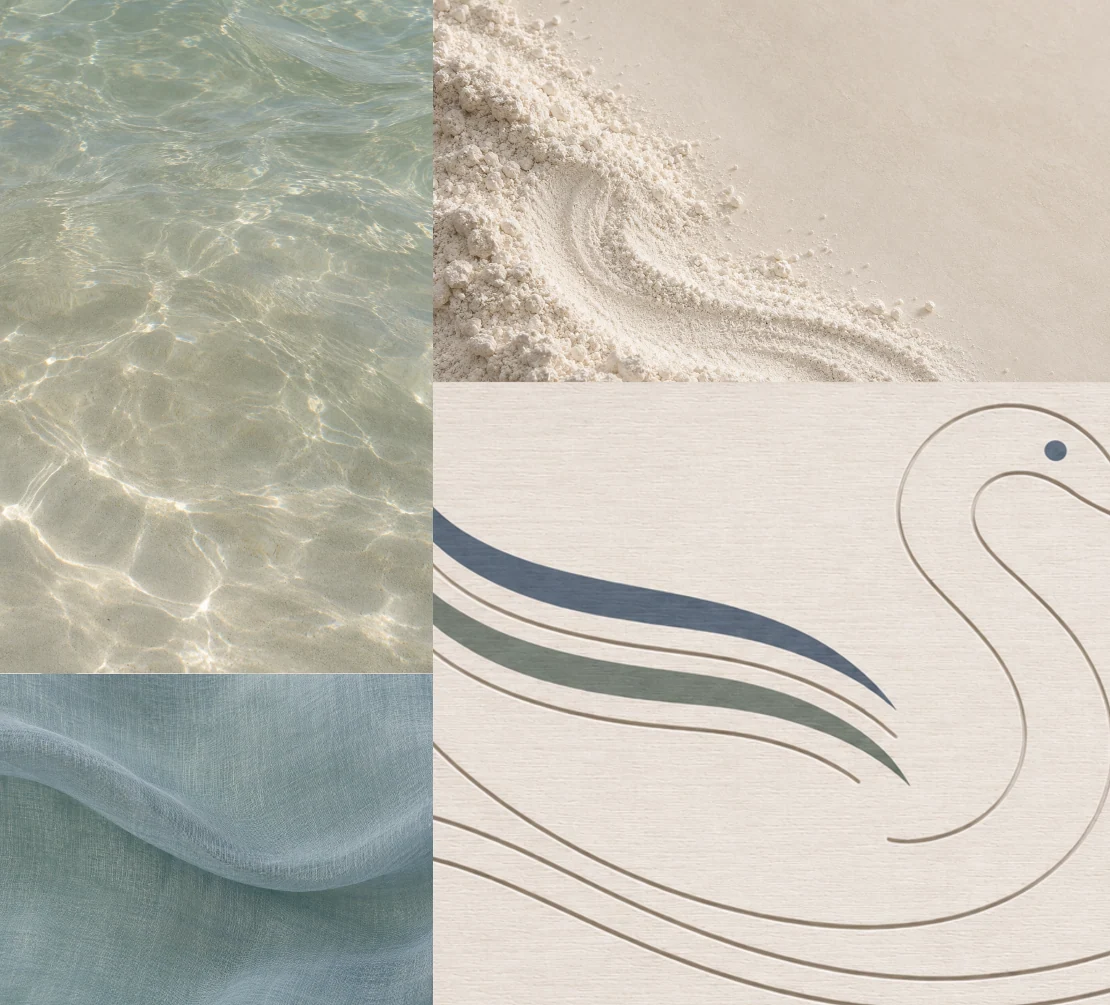
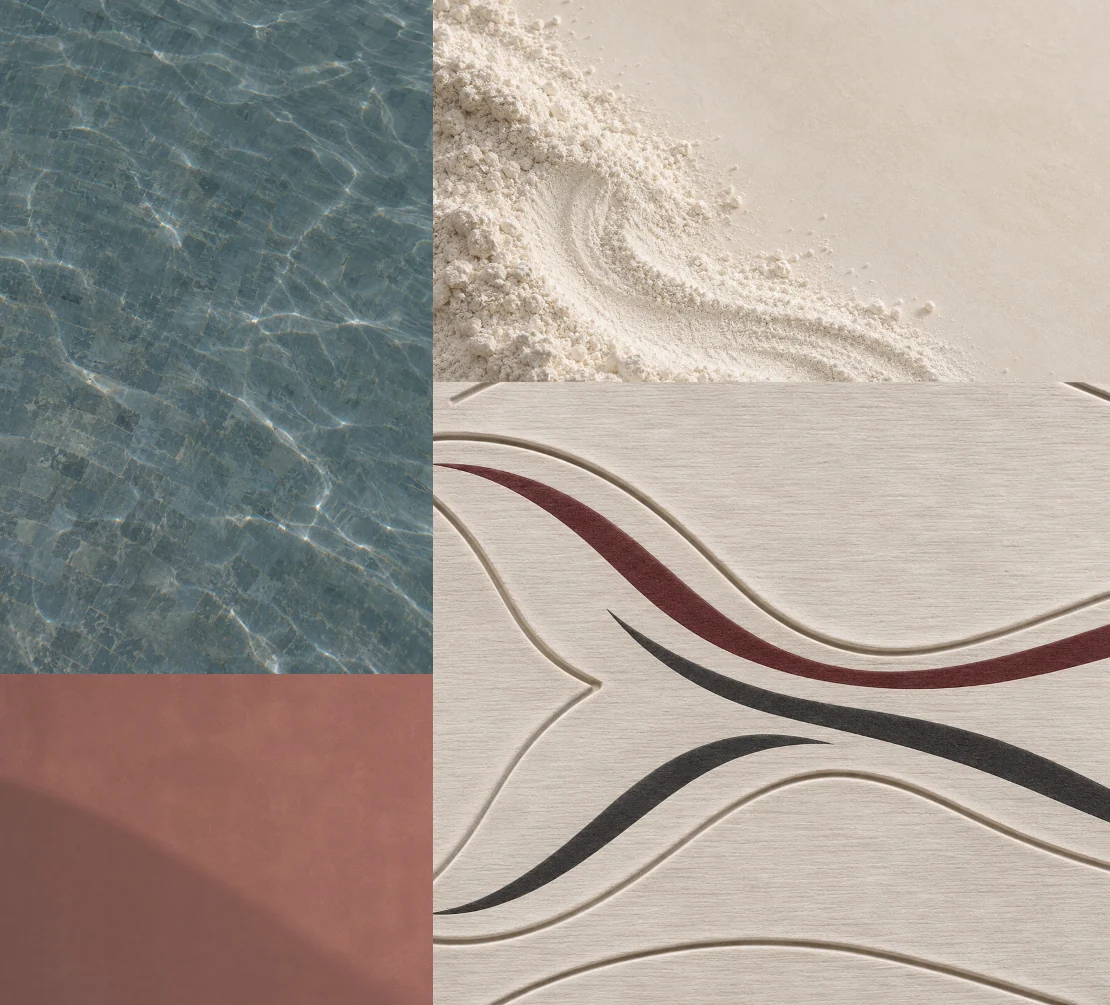
On the finished mats, the borders give way to the pale stone itself. Swan keeps the blue-green sweep of a folded wing and a low ripple under its breast. A warm terracotta line runs along the back of Fish. There’s enough space around its tail to imagine the flick that comes next.
Step out of the shower and the stone takes up the water from your feet. As you reach for a towel, your eye follows the long curve of the bird’s neck. We like to think someone on the way to the cold room once paused for just that long.